


Fiber Optic Pigtail
Your Professional Fiber Optic Pigtail Supplier
Founded in 2017, Shenzhen Bray Communication Technology Co., Ltd. (BRAY-CT) is a professional manufacturer specializing in mold manufacturing, plastic injection molding, and product assembly services. Supported by a team with over 20 years of industry experience, we provide one-stop plastic product solutions for e-commerce brands, startups, and small to medium-sized enterprises worldwide. Our factory integrates R&D, tooling, injection molding production, and assembly under one roof to ensure efficient communication and stable quality control. Equipped with 29 injection molding machines and experienced engineering teams, we are capable of supporting both prototype development and mass production with reliable lead times and flexible manufacturing solutions for global customers.
-
![Fiber Optic Pigtail Single Mode]() Fiber Optic Pigtail Single ModeFiber pigtail is a jumper for a single-head configuration connector. In the fiber-optic communication (transmission) link, it is mainly used for optical path connection between devices and...read more
Fiber Optic Pigtail Single ModeFiber pigtail is a jumper for a single-head configuration connector. In the fiber-optic communication (transmission) link, it is mainly used for optical path connection between devices and...read more -
![Fiber Optic Pigtail Multimode]() Fiber Optic Pigtail MultimodeFiber pigtail is a jumper for a single-head configuration connector. In the fiber-optic communication (transmission) link, it is mainly used for optical path connection between devices and...read more
Fiber Optic Pigtail MultimodeFiber pigtail is a jumper for a single-head configuration connector. In the fiber-optic communication (transmission) link, it is mainly used for optical path connection between devices and...read more -
![Fiber Optic Pigtail Splicing]() Fiber Optic Pigtail SplicingFiber pigtail is a jumper for a single-head configuration connector. In the fiber-optic communication (transmission) link, it is mainly used for optical path connection between devices and...read more
Fiber Optic Pigtail SplicingFiber pigtail is a jumper for a single-head configuration connector. In the fiber-optic communication (transmission) link, it is mainly used for optical path connection between devices and...read more -
![Sc Apc Single Mode Fiber Optic Pigtails]() Sc Apc Single Mode Fiber Optic PigtailsFiber pigtail is a jumper for a single-head configuration connector. In the fiber-optic communication (transmission) link, it is mainly used for optical path connection between devices and...read more
Sc Apc Single Mode Fiber Optic PigtailsFiber pigtail is a jumper for a single-head configuration connector. In the fiber-optic communication (transmission) link, it is mainly used for optical path connection between devices and...read more -
![Fiber Optic Pigtail Kits]() Fiber Optic Pigtail KitsFiber optic pigtail is a fiber optic cable terminated with a factory-installed connector on one end, leaving the other end unterminated. Hence the connector side can be linked to equipment and the...read more
Fiber Optic Pigtail KitsFiber optic pigtail is a fiber optic cable terminated with a factory-installed connector on one end, leaving the other end unterminated. Hence the connector side can be linked to equipment and the...read more -
![E2000 Fiber Optic Pigtail]() E2000 Fiber Optic PigtailFiber optic pigtail is a fiber optic cable terminated with a factory-installed connector on one end, leaving the other end unterminated. Hence the connector side can be linked to equipment and the...read more
E2000 Fiber Optic PigtailFiber optic pigtail is a fiber optic cable terminated with a factory-installed connector on one end, leaving the other end unterminated. Hence the connector side can be linked to equipment and the...read more


Why choose us
One-Stop Manufacturing Solution
From mold development to injection molding, assembly, and packaging, we provide complete manufacturing solutions under one roof.
Our Certificate
Certified with ISO9001, we implement full-process quality inspection from raw materials to final delivery, ensuring consistent product quality and reliability.
Flexible Customization Support
Customers can provide concepts, sketches, 3D files, or physical samples. Our team offers technical evaluation and tailored manufacturing solutions based on different project needs.
Sales Market
Our products are mainly exported to Europe and Asia-Pacific markets, with annual sales exceeding RMB 30 million, demonstrating stable cooperation with overseas customers.

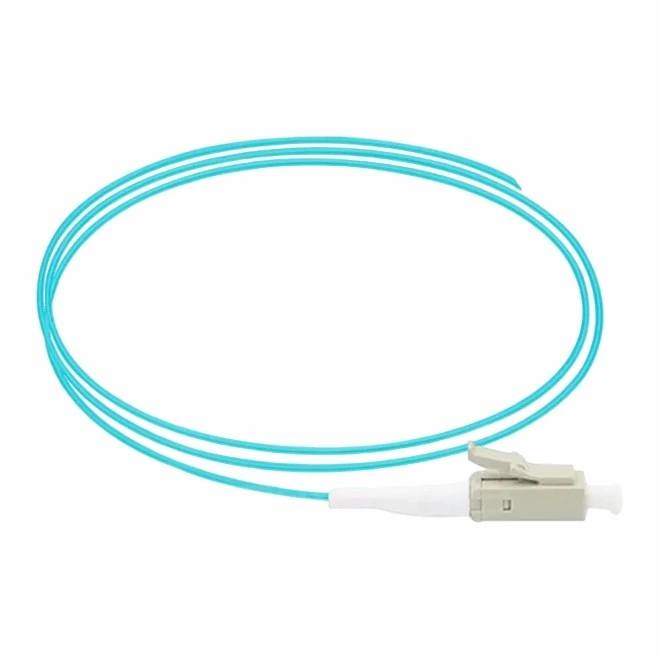
A fiber optic pigtail is a fiber optic cable with one end terminated with a factory-installed connector and the other end unterminated. As a result, the connector side can be connected to equipment, while the other side is fused in the case of fusion splicing and a mechanical connection in the case of mechanical splicing optical fiber cables. Fiber-optic pigtails are used to connect fiber-optic cables using fusion or mechanical splicing. High-quality pigtail cables, combined with proper fusion splicing techniques, provide the highest performance for fiber optic cable terminations.
Specifications
|
Parameter |
Singlemode Patchcord |
Multimode Patchcord |
||
|
Polishing Type |
PC |
UPC |
APC |
PC |
|
Insertion loss(dB) |
<=0.3dB,MTRJ<=0.5dB |
<=0.3dB |
<=0.3dB |
<=0.3dB,MTRJ<=0.5dB |
|
Return loss(dB) |
>=45dB,MTRJ>=35dB |
>=55dB |
>=65dB |
|
|
Operating temperature |
-20ºC~75ºC |
|||
|
Storage Temperature |
-40ºC~75ºC |
|||
|
100 mating cycles loss |
I.L changed≤0.1dB |
|||
|
Durability |
>1000 cycles |
|||
Benefits of Fiber Optic Pigtail

Long Distance Transmission
Their capacity to maintain signal integrity over long distances is unmatched, making them an ideal choice for telecommunications and CATV networks.

High Data Rate
The design of these fibers allows for higher data transfer rates, ensuring efficient and reliable data transmission.

Decreased Signal Interference
The single light mode propagation minimizes the risk of signal interference and dispersion, enhancing the overall network performance.

Cost-Effective
These fibers are generally less expensive to produce and install, making them a cost-effective solution for short-distance transmissions.

High Bandwidth Short Distance Transmissions
With their ability to carry multiple light modes, these fibers can provide high bandwidth over short distances, suitable for data and audio/visual applications in LAN networks.

Versatility
The larger core diameter reduces the need for precision when aligning connections, making these fibers a versatile option for various network configurations.
LC Pigtail Connectors
These are small and save space in tight spots. Used a lot in data centers. If your setup needs lots of connections in one panel, LC is a great pick.
SC Pigtail Connectors
These are square and easy to push in or pull out. You’ll see them in cable TV and data systems. Reliable and user-friendly.
ST Pigtail Connectors
Round and twist-on. These are old school but still used in schools, labs, and legacy systems. They lock in place with a bayonet-style twist.
FC Pigtail Connectors
Good for places that shake or move, like industrial setups. They screw on tight and don’t pop out under stress.
MTP/MPO Pigtail Connectors
These aren’t for beginners. They hold lots of fibers, mostly 12 or more in one line. Think cloud servers or big telecom sites. They need special pigtail connector kits to work with.
Applications of Fiber Optic Pigtail
Building fiber optic networks: Pigtails are used to connect various components in fiber optic networks, such as optical transceivers, optical amplifiers, and optical splitters.
Testing and maintenance: Pigtails are used to test and maintain fiber optic networks. They can be used to connect test equipment to the network or to isolate a problem area.
Data centers: Pigtails are used in data centers to connect optical transceivers and patch panels. This enables data centers to handle large amounts of data traffic efficiently and with minimal signal loss.
Telecom networks: Pigtails are used in telecom networks to connect various devices, such as telephones, routers, and switches.
Security systems: Pigtails are used in security systems to connect cameras, sensors, and controllers.
Optical Connector: This is the pre-installed end of the fiber pigtail. It’s the component that gets plugged into the optical device or panel. Different types of connectors exist, like SC, LC, FC, ST, and E2000, each serving other purposes and environments.
Core and Cladding: The body is the thin glass center of the fiber where the light propagates. Surrounding the body is another layer of glass known as the cladding. Their combined structure enables total internal reflection, allowing light to travel down the fiber.
Buffer Coating: This is a plastic coating that protects the fiber from damage and moisture. In fiber pigtails, this coating is usually tight-buffered, meaning it’s directly in contact with the cladding.
Splice: This refers to the junction where the exposed end of the fiber pigtail is joined to another fiber. Fusion splicing, which uses heat to fuse the threads, is the most common method as it provides a high-quality, reliable splice.
Transmission Modes: Fiber pigtails can be single-mode or multimode. Single-mode fibers transmit one signal per fiber and are used for long-distance transmission. In contrast, multimode fibers transmit multiple light rays or modes simultaneously and are used for short distances.
How to Choose the Right Fiber Pigtail
Fiber Type
Match single-mode to single-mode and multimode to multimode.
01
Connector Type
Make sure it fits your device or panel.
02
Cable Jacket
Some jackets are better for heat, others for tight spaces.
03
Fiber Count
Need one strand? Get a single. Need many? Choose pigtails cable.
04
Location
For dusty or messy spots, sealed or armored pigtails are best.
05

Strip the Fiber: Begin by stripping the protective coating from the end of each line using a fiber optic stripper. This exposes the delicate glass fiber.
Clean the Fiber: Clean the exposed fiber with a lint-free wipe soaked in isopropyl alcohol to remove any residues.
Cleave the Fiber: Using a fiber cleaver, create a clean, flat end-face on each fiber. This ensures optimal alignment and minimal signal loss during fusion.
Place Fibers in the Fusion Splicer: Position each fiber in the splicer’s holding fixture. The fusion splicer automatically aligns the threads using a combination of image and light detection.
Fusion Splice: Initiate the fusion splice. The splicer uses an electric arc to melt the fibers, fusing them. Allow the splice to cool.
Inspect the Splice: Examine the splice using the splicer’s magnification features. Look for a uniform line indicating a successful fusion.
Protect the Splice: Finally, slide a heat-shrink splice protector over the splice and apply heat to secure it.
Fiber Pigtail Installation and Usage
Preparation: Gather all necessary tools and equipment to ensure a smooth installation process. This includes fiber pigtails, connectors, a fusion splicer, and a fiber cleaver.
Cleaning: Before installation, clean the fiber pigtail ends with a quality fiber cleaner to remove any dust or debris.
Stripping: Use a fiber stripping tool to remove the outer jacket of the fiber pigtail, exposing the optical fiber.
Cleaving
Utilize a fiber cleaver to achieve a precise, clean cut at the end of the fiber. This step is critical for a successful fusion splice.
Splicing
Following the stripping and cleaving process, proceed to join the fibers using a fusion splicer. This device will align and fuse the thread ends together.
Securing the Connection
Once the splice is completed, protect the splice point using heat shrink tubing or a splice sleeve to secure the connection.
Testing
Finally, test the newly installed fiber pigtail assembly using an optical power meter to ensure the splice provides a clear signal path.
Maintenance of Fiber Optic Pigtail
Visual Inspection: Check for noticeable signs of damage, such as cracks or bends in the fiber or dirt on the connectors.
Cleaning: Use appropriate cleaning methods to remove any dust or debris from the connectors, ensuring a clean signal path.
Testing: Use fiber optic testing tools to measure signal loss and identify any problematic areas.
Replacement: If problems persist, it may be necessary to replace components or even the entire pigtail.
Documentation: Keep detailed records of any issues and resolution steps taken, creating a valuable resource for future troubleshooting.
FAQ
As one of the most professional fiber optic pigtail manufacturers and suppliers in China, we're featured by quality products and good service. Please rest assured to wholesale customized fiber optic pigtail from our factory. For quotation, contact us now.
pigtail optic, sm sc pigtail, pigtail sc sc