

As a supplier of Fiber Optic Pigtail Kits, I often encounter inquiries about the bandwidth of these essential components in the fiber - optic communication field. In this blog, I will delve into the concept of bandwidth in Fiber Optic Pigtail Kits, exploring its significance, influencing factors, and how different types of pigtails perform in terms of bandwidth.
Understanding Bandwidth in Fiber Optic Pigtail Kits
Bandwidth, in the context of fiber - optic communication, refers to the range of frequencies or the amount of data that can be transmitted through a fiber - optic cable or pigtail within a given time frame. It is typically measured in hertz (Hz) for frequency range and bits per second (bps) for data - carrying capacity.
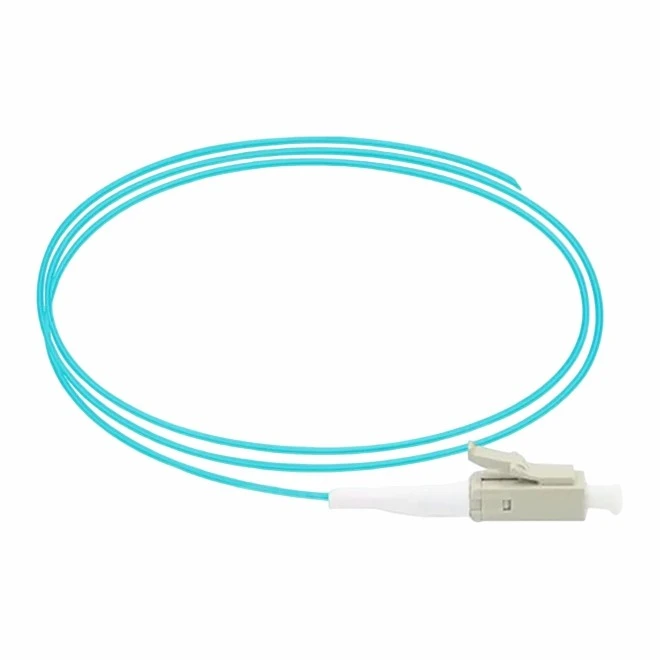

For Fiber Optic Pigtail Kits, bandwidth is a crucial parameter as it determines the speed and efficiency of data transmission. A higher bandwidth means that more data can be sent and received simultaneously, enabling faster communication and better performance in applications such as high - speed internet, data centers, and telecommunications networks.
Factors Affecting the Bandwidth of Fiber Optic Pigtail Kits
Fiber Type
The type of fiber used in the pigtail is one of the most significant factors influencing bandwidth. There are two main types of fiber: single - mode and multimode.
- Single - Mode Fiber: Single - mode fiber has a very small core diameter (usually around 9 microns). It allows only one mode of light to propagate through the fiber, which results in less dispersion and attenuation. As a result, single - mode fiber can support extremely high bandwidths over long distances. For example, modern single - mode fiber can achieve bandwidths of up to several terabits per second over distances of tens or even hundreds of kilometers. You can find high - quality Fiber Optic Pigtail Single Mode in our product range.
- Multimode Fiber: Multimode fiber has a larger core diameter (commonly 50 or 62.5 microns). It allows multiple modes of light to propagate simultaneously. However, this also leads to more dispersion, which limits the bandwidth and the distance over which data can be transmitted. Multimode fiber is typically used for shorter - distance applications, such as local area networks (LANs) within a building. Our Fiber Optic Pigtail Multimode products are designed to meet the requirements of such applications.
Connector Type
The connector used in the pigtail can also affect the bandwidth. Different connector types have different insertion losses and return losses, which can impact the overall performance of the fiber - optic link. For example, the SC APC (Subscriber Connector - Angled Physical Contact) connector is known for its low return loss, which helps to maintain high - quality signal transmission. Our Sc Apc Single Mode Fiber Optic Pigtails with SC APC connectors are designed to provide excellent bandwidth performance.
Wavelength
The wavelength of the light used for transmission is another important factor. Different wavelengths of light have different propagation characteristics in fiber - optic cables. For single - mode fiber, the most commonly used wavelengths are 1310 nm and 1550 nm. These wavelengths offer low attenuation and high bandwidth capabilities. In multimode fiber, 850 nm and 1300 nm are the typical wavelengths used.
Bandwidth Performance in Different Applications
Data Centers
In data centers, high - speed data transfer is essential. Single - mode fiber pigtails are often used to connect servers, storage systems, and network switches. The high bandwidth of single - mode fiber allows for the rapid transfer of large amounts of data, enabling efficient operation of data - intensive applications such as cloud computing and big data analytics.
Telecommunications Networks
Telecommunications networks require reliable and high - bandwidth connections to support voice, video, and data services. Fiber - optic pigtails play a crucial role in these networks, providing the necessary bandwidth for long - distance communication. Whether it's connecting cell towers or providing broadband access to homes and businesses, the bandwidth of fiber - optic pigtails ensures seamless communication.
Local Area Networks (LANs)
In LANs, multimode fiber pigtails are commonly used due to their cost - effectiveness and suitability for shorter distances. While the bandwidth of multimode fiber is lower compared to single - mode fiber, it is sufficient for most LAN applications, such as file sharing, email, and web browsing.
Measuring and Testing Bandwidth
To ensure the proper performance of Fiber Optic Pigtail Kits, it is essential to measure and test their bandwidth. There are several methods and tools available for this purpose.
- Optical Time - Domain Reflectometer (OTDR): An OTDR is a widely used tool for testing fiber - optic cables. It sends a pulse of light into the fiber and measures the reflections and backscattering of the light. By analyzing the data, it can determine the length of the fiber, the location of any faults, and the attenuation characteristics, which are related to the bandwidth.
- Bit Error Rate Tester (BERT): A BERT is used to measure the bit error rate (BER) of a fiber - optic link. It sends a known pattern of data through the link and compares the received data with the original pattern. A low BER indicates a high - quality link with good bandwidth performance.
Conclusion
The bandwidth of Fiber Optic Pigtail Kits is a critical factor in determining their performance in various applications. Understanding the factors that affect bandwidth, such as fiber type, connector type, and wavelength, is essential for selecting the right pigtails for specific needs. As a supplier of Fiber Optic Pigtail Kits, we are committed to providing high - quality products with excellent bandwidth performance.
If you are interested in purchasing Fiber Optic Pigtail Kits or have any questions about their bandwidth and performance, please feel free to contact us for further discussion and procurement negotiation. We are here to help you find the best solutions for your fiber - optic communication needs.
References
- G. Keiser, "Optical Fiber Communications," McGraw - Hill, 2013.
- ITU - T Recommendations on fiber - optic communication systems.